



Hypodermic Needle
What is Hypodermic Needle?
A hypodermic needle is a hollow needle that is used in medical procedures to inject medications or fluids directly into the body or to withdraw fluids or blood for analysis. It is commonly used in vaccinations, administering medication, or taking blood samples. Hypodermic needles come in different sizes, ranging from small, thin needles for delicate procedures to larger needles for thicker substances. These needles are typically made of stainless steel and are designed to minimize discomfort or pain during the procedure.

Company Profile
Ravine is a professional manufacturer and exporter that is concernd with the design, development and production , medical devices, healthcare products, cosmetics and etc. Enterprise concept of "respect, integrity, innovation, persistence" has enabled us to meet customers’ requirements, no matter they are importers or retailers.
Ravine cooperate with Westlake university and other top scientific research institutes to develop high quality products. All of our products comply with international quality standards and are greatly appreciated in a variety of different market throughout the world. Our team has over 20 years export experience, we have good patience and enthusiasm to serve every customer.
Why choose us?
Expertise and experience
We have a team of professionals who have many years of experience and are experts in their respective fields.
Personalized service
We provide personalized services tailored to meet our clients' unique needs, ensuring a positive experience.
Innovative solutions
We continually innovate and develop new solutions to meet our clients' changing needs.
Trust and reliability
We have a proven track record of delivering high-quality products and services, building trust and reliability with our client base.
Benefits of Hypodermic Needle
Easy and accurate administration of medication.
Lower likelihood of complications and side effects due to precise dosing.
Effective for administering vaccines and other injections for disease prevention.
Allows for delivery of medication into the bloodstream or muscle tissue.
Often used for diagnostic purposes, such as drawing blood samples for laboratory tests.
Can be sterilized for safe reuse.
Can be used for regional anesthesia to numb specific areas of the body or for pain management.
Helps prevent the spread of communicable diseases through safe, sterile use.
Types of Hypodermic Needle


Standard hypodermic needles
These are the most commonly used needles, with a varying gauge (thickness) ranging from 18 to 32 and a length of 1/2 inch to 1 1/2 inches.
Insulin needles
These are shorter and thinner than standard needles, with a gauge of between 27 and 31 and a length of 5/16 inch to 1/2 inch. They are specifically used for administering insulin injections.
Tuberculin needles
These needles are longer and thinner than standard needles, with a gauge of 25 and a length of 5/8 inch. They are used for administering small doses of medication or for skin testing.
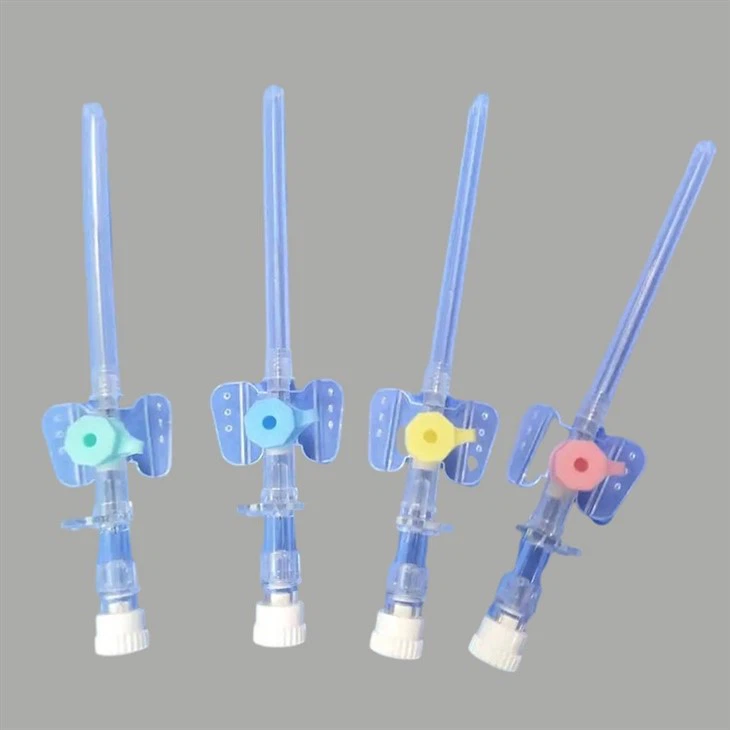
IV catheters
These are larger needles that are used for IV infusions and blood draws. They come in sizes ranging from 14 to 24 gauge and are typically 1 1/4 inch to 2 inches in length.
Spinal needles
These needles are longer and thicker than standard needles, with a gauge ranging from 22 to 27 and a length of 3 1/2 to 5 inches. They are used for spinal taps and spinal anesthesia.
Butterfly needles
These are short, thin needles with two wings that are used for drawing blood or accessing veins. They are typically a 23 or 25 gauge and range in length from 1/2 inch to 3/4 inch.
Filter needles
These are needles with a filter at the tip that is used to remove particles or debris from medication before it is administered. They come in various sizes and lengths.
Material of Hypodermic Needle
Hypodermic needles are normally made from a stainless-steel or Niobium tube through a process known as tube drawing where the tube is drawn through progressively smaller dies to make the needle. The end of the needle is bevelled to create a sharp pointed tip, letting the needle easily penetrate the skin.


Application of Hypodermic Needle
The hypodermic needle is primarily used for delivering medication or fluids subcutaneously (under the skin), intravenously (into the vein), or intramuscularly (into the muscle). It is commonly used in healthcare settings for injections, blood draws, and other medical procedures. The use of hypodermic needles has revolutionized the medical field, allowing for precise and efficient delivery of medication and treatment. They are also used in veterinary medicine and in the laboratory for research purposes. Improved technology has led to the development of smaller and thinner needles, making injections less painful and reducing the risk of infections.
Process of Hypodermic Needle
The production process for hypodermic needles involves several steps, including selecting the appropriate stainless steel material, cutting needle tubes to specific lengths, grinding and polishing the needle tips, assembling the needle with a syringe or injection device, sterilizing the final product, and packaging the needles for medical use.

Components of Hypodermic Needle
Cannula
This is the hollow needle part of the hypodermic needle, which is used to pierce the skin and inject or withdraw fluids.
Hub
This is the part of the needle that attaches to the syringe or other device for fluid administration.
Bevel
This is the slanted tip of the needle, which is designed to reduce the resistance when piercing the skin.
Shaft
This is the long, thin portion of the needle that connects the hub to the cannula.
Lumen
This is the hollow space inside the needle through which fluids are injected or withdrawn.
Point
This is the sharpened tip of the cannula.
Flange
This is a flat rim at the base of the hub, which is used to hold the needle steady during injection or withdrawal.
Protective cap
This is a plastic or metal cover that is placed over the needle to prevent accidental injury and contamination when the needle is not in use.
How to Use a Hypodermic Needle
Connect the hypodermic needle tip to a suitable syringe (via a luer lock or luer slip adapter).
Ensure the plunger is pushed forward. This ensures the correct substance is drawn and no air enters the syringe.
Insert the needle & syringe into the fluid substance (medication) or directly into the patient if taking blood.
Slowly & carefully pull back the syringe plunger, to extract blood or fill the syringe with fluid.
To dispense fluid, place the needle into the patient at a 45-90 degree angle (in the correct area/zone), slowly & carefully pushing the plunger forward.
Dispose of the syringe & needle appropriately (in the correct sharps waste containers, based on what medication & substances the needle and syringe have come in contact with).
How to Maintain Hypodermic Needle?
Clean the needle properly
After using the needle, clean it thoroughly with an alcohol swab. If the needle has been exposed to blood or other body fluids, be sure to sanitize it in a solution of 1 part bleach to 10 parts water for 30 minutes.
01
Store the needle carefully
Store needles in a clean, dry place, preferably in a puncture-proof container. This will help to prevent accidental needle-stick injuries and keep them clean and sharp.
02
Check the needle for damage
Before using a needle, inspect it carefully to ensure that it is not bent or damaged in any way. Damaged needles can break during use, causing injury.
03
Use the right needle for the job
Different needles are designed for different purposes, so always use the needle that is appropriate for the task at hand. For example, a hypodermic needle is not suitable for drawing up medication from a vial with a rubber stopper, as it can easily blunt the needle.
04
Dispose of needles properly
Never reuse needles. Once a needle has been used, dispose of it in a puncture-proof container. Do not throw needles in the trash, as they can pose a danger to others.
05
How do Hypodermic Needles Work?
Hypodermic needles are mostly used to inject medication or extract fluids from the body. The needle is a small, hollow tube made of stainless steel. The sharp tip of the needle is designed to penetrate through the skin, while the other end is attached to a syringe that contains the medication or fluid to be administered.
When the needle is inserted into the skin, it creates a small opening through which the medication or fluid can enter or leave the body. The needle is designed to create as little damage as possible to the surrounding tissue, so it is made to be as thin as possible while still being strong enough to penetrate the skin.
The size of the needle is usually measured by its gauge or thickness. The lower the gauge number, the thicker the needle. Thicker needles are often used to extract thicker fluids, while thinner needles are used for more delicate procedures where less damage to the tissue is desired.
Hypodermic needles work by delivering the desired medication or extracting fluids from the body with precision, allowing for accurate dosing and effective treatment. They have revolutionized medicine and made a wide range of medical procedures possible.
How to Choose Hypodermic Needle
Needle size
The size of the needle refers to its overall length and diameter. Needle sizes typically range from 18 to 30 gauge. The larger the gauge number, the smaller the needle diameter. The size of the needle will depend on the type of injection, the medication being administered, and the size and age of the patient. For larger doses, a longer needle may be required.
Needle length
The length of the needle will vary depending on the injection site and the depth of the tissue being penetrated. Intramuscular injections usually require longer needles than subcutaneous or intravenous injections.
Needle gauge
The gauge of the needle is an important factor to consider. A smaller gauge needle may be less painful for the patient and may be easier to use for subcutaneous or intravenous injections. Larger gauge needles may be necessary for thicker and more viscous medication.
Type of needle
The type of needle you choose will depend on the type of injection being administered. A blunt tip needle may be used for drawing medication from a vial or for injecting medication into a port or hub. A sharp tip needle may be used for injecting medication into the tissue.
Sterilization
It is important to choose a sterile needle to ensure the injection site does not become infected. Needles may be single-use or multi-use. Be sure to dispose of single-use needles appropriately and sterilize multi-use needles after each use.
Patient preference
It is also important to consider the patient's preference. For example, some patients may have a fear of needles or experience pain during the injection. In these cases, using a smaller gauge needle may be beneficial.
Certificate


Our factory
Ravine cooperate with Westlake university and other top scientific research institutes to develop high quality products. All of our products comply with international quality standards and are greatly appreciated in a variety of different market throughout the world. Our team has over 20 years export experience, we have good patience and enthusiasm to serve every customer.


FAQ
We're well-known as one of the leading hypodermic needle manufacturers and suppliers in China. Please rest assured to wholesale high quality hypodermic needle at competitive price from our factory. For custom service, contact us now.
Hypodermic Needle